Tags
Product
Published
Ready to activate your content? Talk to our team.
Every brand invests in content that behaves the way people expect: swiped through, tapped into, or scrolled past in a heartbeat if it doesn’t earn the next second. A product shoot becomes an Instagram carousel. A fan films something at a live event. A creator posts a review of your product drop, unprompted, unpaid, and better than anything your last brief produced.
It was built for a feed that rewards swiping, tapping and scrolling, not a static ad slot, and it performs because it matches the platform it lives on. 92% of consumers trust content like this over branded advertising, and it earns 6.9x more engagement than content a brand produces itself.
Paid media has been slower to catch up. A study tracking 6,200 campaigns across 18 countries found interactive, shoppable video ads outperforming static formats by 187% in engagement rate, and mobile audiences are four times more likely to engage with a native, in-feed format than the same content served as standard display.
That is where the waste sits. Content that has already proved itself with a real audience gets stripped down, remade from scratch, or blocked outright the moment it moves into paid media, and every one of those outcomes throws away the one thing that made it worth spending media budget on: proof that it already works.
The smartest media buyers we talk to want to take content that has already proved itself organically and put it in front of a colder audience, in a more premium, higher-attention environment, without remaking it from scratch. That’s a different ask, closer to “let our best content do this job too” rather than “make us an ad.”
However, most ad formats aren’t built to pull that off. Either the brand rebuilds static creative, which costs time and money and leaves the content that already worked sitting unused, or the original content gets pushed into the ad slot anyway and quietly fails once it is live: a support ticket and a wasted flight, rather than a working placement.
That’s why we built Ad Unit at Amondo: so brands can put content that already works into paid media without remaking it, and have it perform there the way it already has.
How it works
Ad Unit takes content pulled from where it already exists (curated social posts, tagged and shared content, creator and partner assets) and repurposes it for an ad audience. Photos and video automatically adjust to the placement, so what worked on a social feed is built to work in a paid slot too.
From the Amondo dashboard, you build the placement as a Grid or a Carousel, mixing and matching Tiles pulled straight from your Amondo library. Every placement is engineered to load properly and hold up once it is live, so what you build in the dashboard is exactly what runs, on every exchange and host page it lands on.
Every Ad Unit placement comes with its own reporting, broken down two ways. At the placement level, you get total views, average time in view, and overall interaction rate, the top-line read on whether people stopped and engaged at all. Tile by Tile, you get impressions, clicks, CTA clicks, and average time spent inside each one, so you know exactly which piece of content earned attention and which one got scrolled past.
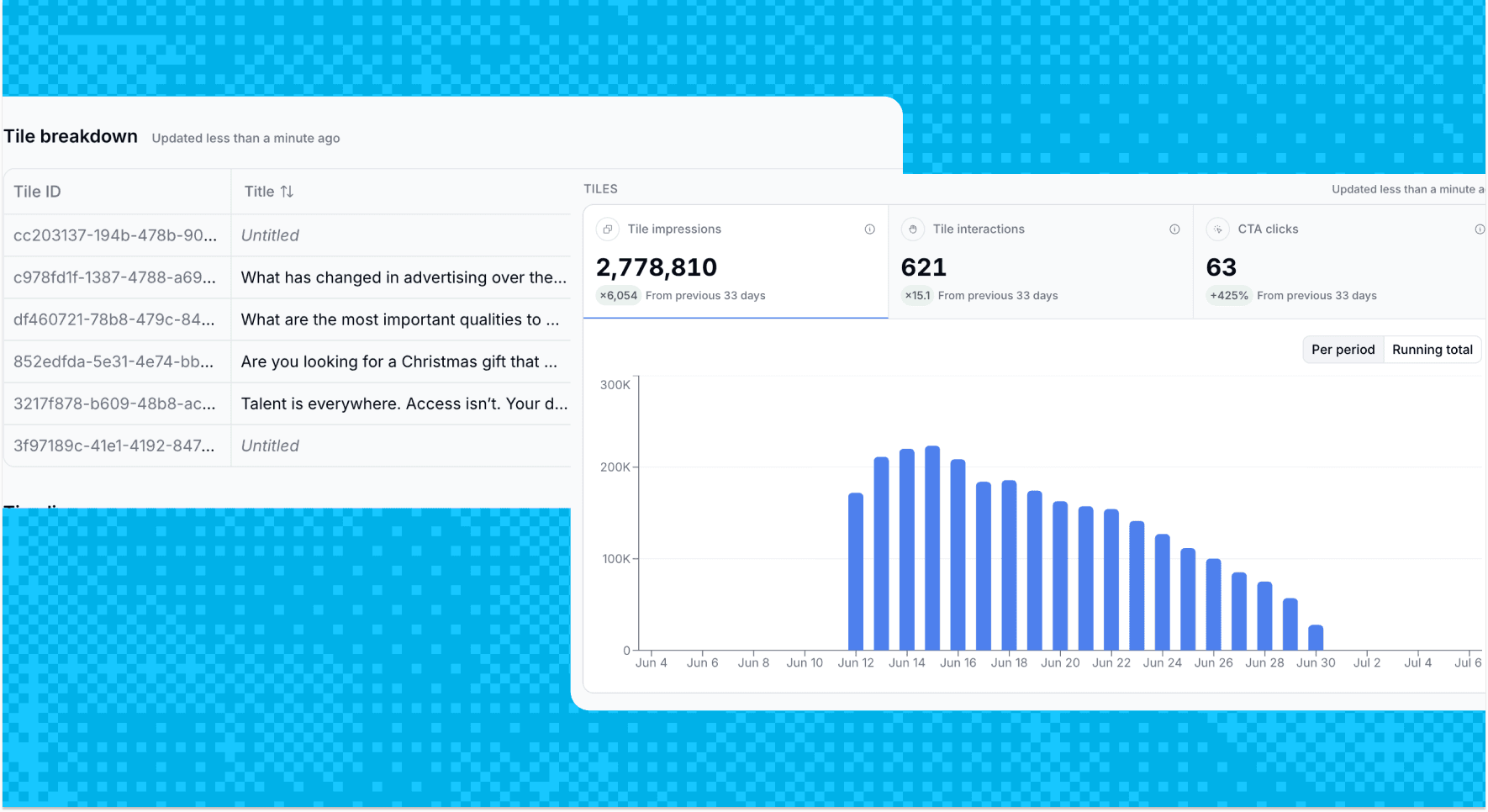
That’s the same principle behind everything Amondo does: centralise the content, activate it everywhere, then measure all of it as one system. A brand running Ad Unit doesn’t just learn whether a placement worked. It learns which specific piece of content earned the dwell time, which one drove the click, and whether that maps to what the campaign was actually built for, brand awareness reads on time in view and interaction rate, performance reads on CTA clicks and CTR.
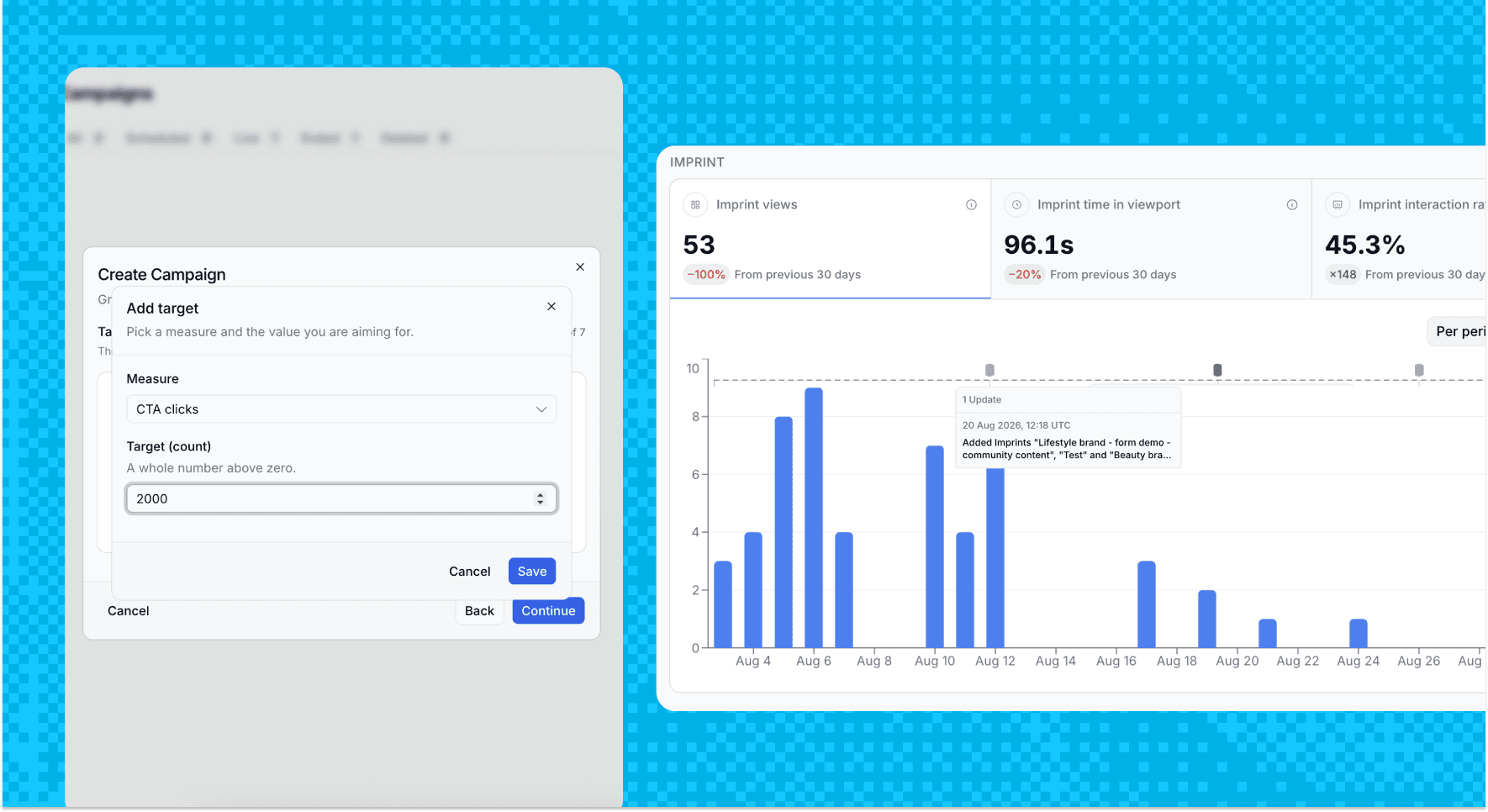
When an Ad Unit is part of a bigger push (several placements running across different exchanges, publishers or flights), those placements can sit inside an Amondo Campaign together. Group them under one goal, choose the KPIs that matter, and see the combined picture instead of checking each placement on its own. That’s the difference between knowing one Ad Unit performed and knowing whether the whole paid push moved the number it was set up to hit.
Interactive ad format: more than a static ad unit
Most ad formats stop at the click, but Ad Unit, an interactive ad format, keeps the journey going.
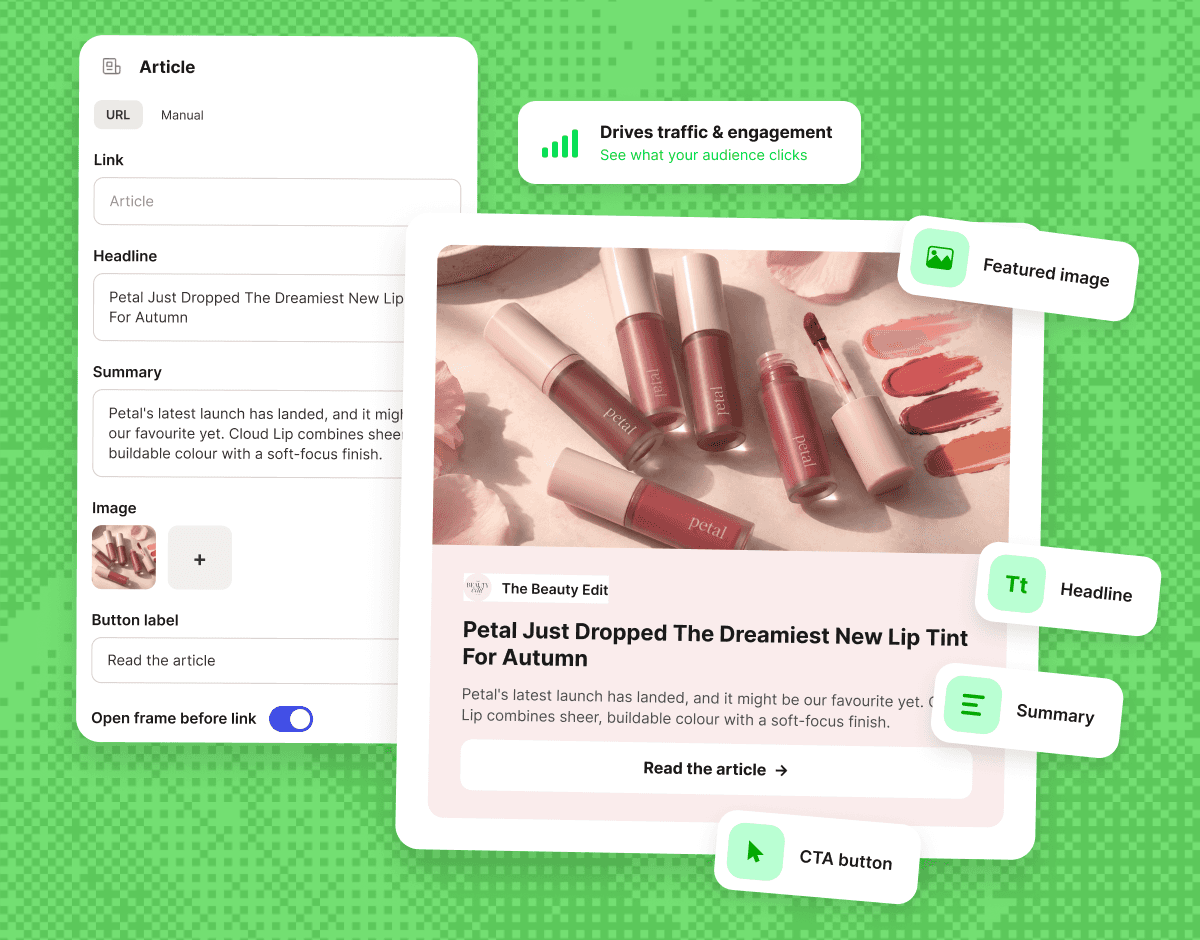
Every Tile type from the Amondo library can go into an Ad Unit placement: Click-Through Tiles that send someone further into a journey, Reveal Tiles that unlock extra content on tap, video, images, whatever the campaign needs, all inside the same placement.
The layout flexes to match: a grid from one to five columns and up to ten rows, or Carousel, which stacks Tiles into a single scrollable column of up to five, so content that was always meant to be swiped through – an Instagram or TikTok carousel, a run of product shots – keeps behaving the way it already does on social.
Tap any Tile, and it expands to fill the whole grid, with simple controls to move to the next Tile, the previous one, or close and go back. We’ve rebuilt that expanded view to feel more premium too: backgrounds behind the content can be fully customised to match a brand’s look exactly, rather than sitting inside a generic template.
Because there’s always another Tile to open, people browse an Ad Unit placement the way they’d browse a feed, not glance at a static ad and move on. That’s what having multiple pieces of content in one placement actually buys you: not just more to look at, but dwell time and engagement depth that only come from someone choosing to keep going. The longer they stay, the more likely they are to act once they do.
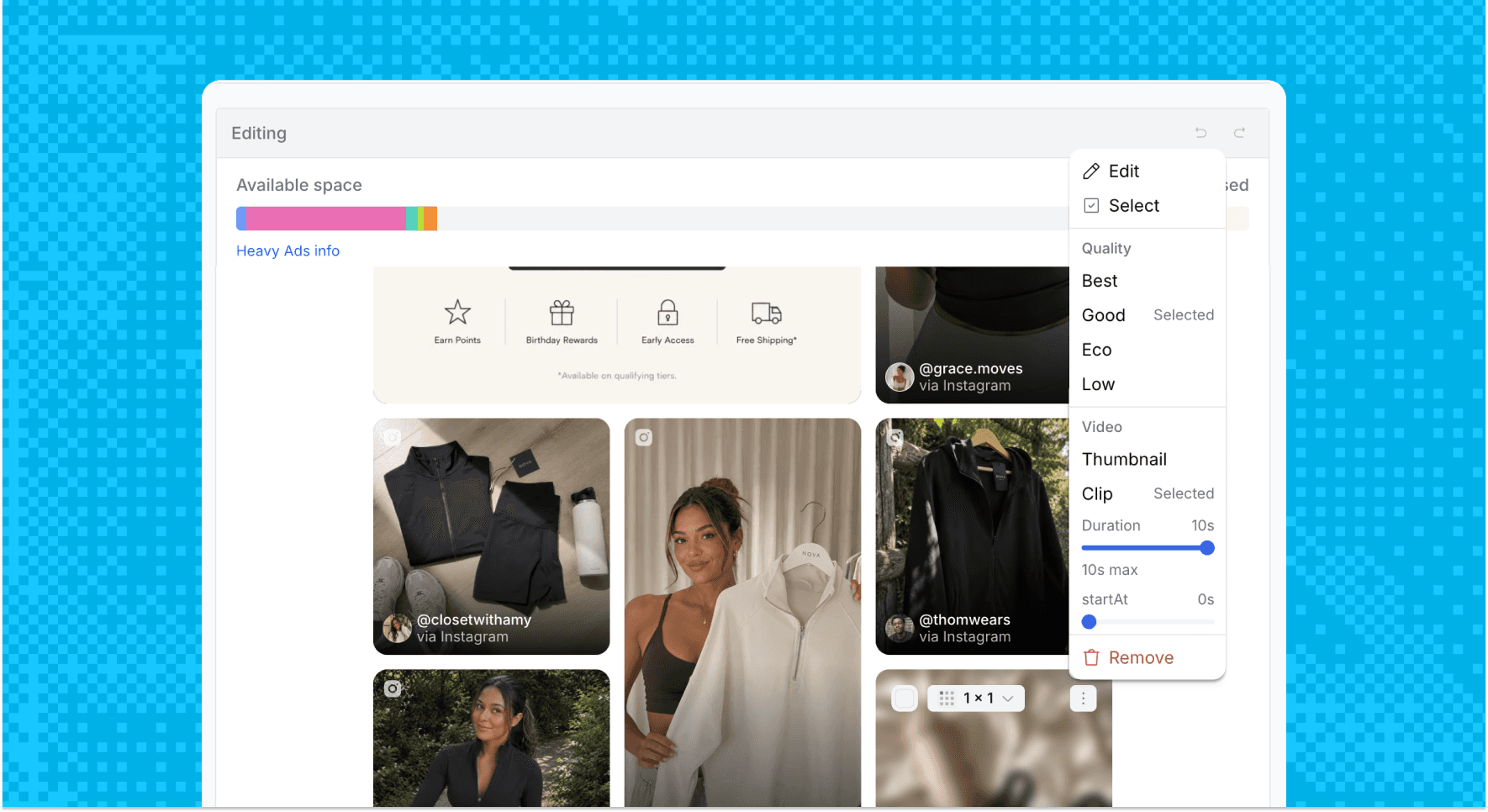
Meanwhile, video content behaves the way a brand wants it to. Choose where a clip starts, how long it plays for (up to 10 seconds), and whether it shows as a looping clip or a static thumbnail until someone taps it, instead of hoping the exchange’s default settings do the content justice.
How brands are already building with this format
Brands are already using Ad Unit in very different ways, and each one succeeds for its own reasons.
Luxury brands are building a moment, not chasing a click. A product drop, a collaboration, an anniversary, several pieces of content that already worked on social, placed with no CTA Tile at all. Luxury marketing has always worked this way: people buy into a brand’s feel and world before they buy the product, and a creator showing that feel off does more for attention and loyalty than any hard sell could. Ad Unit lets that content keep doing exactly that job, in front of a wider, colder audience, without breaking the spell with an ask.
DTC and shoppable campaigns lean the other way, just as deliberately. Social proof is one of the strongest reasons people click an Instagram ad in the first place, so DTC brands have been leaning into this format hard, using it to A/B test CTA placement and supporting content side by side, to see exactly what drives action and where.
Other brands are repurposing creative made for a completely different campaign into an Ad Unit placement, so content that already worked once can start performing again for a wider audience. It still carries the same social proof it always did – real people doing something authentic – and that value doesn’t expire just because the campaign that made it did. Meaning it reaches new audiences long after the fact.
Ad Unit, available now
Content costs more to justify than it used to, and media budgets are under closer scrutiny than ever. Whether you’re protecting a luxury moment, testing which CTA converts, or giving old creative a second campaign, Ad Unit lets content you’ve already invested in do a second job well, instead of leaving you stuck making new creative from scratch.
Ad Unit is live now for all Amondo customers running paid placements. Speak to your customer success contact to set up your first Ad Unit campaign, or book a demo to see it in action.
More from the blog

Ready to build something your audience will remember?
Bring your world of content into one connected content system - and make every piece work harder.
Trusted by brands that take content seriously