Tags
Sport
Published
Ready to activate your content? Talk to our team.
Sports institutions worldwide operate in an environment where attention is scattered, platforms hide meaningful data, and fan behaviour is harder to interpret than ever.
And while the pandemic added a greater sense of community to fan groups by accelerating digital participation, it also exposed a deeper problem: more content and more channels did not create more clarity. Engagement increased, yet insight into what actually drives fan action remained limited.
The brands that lead are those that can capture first-party interaction data, connect audience behaviour to commercial outcomes, turning these signals into intelligence they can act on.
Amondo has collected seven key behaviour shifts reshaping sports marketing in 2023 and beyond for you to stay on the pulse.
Enhanced matchday engagement
When gameday arrives, fans worldwide have only one thing on their mind, and that’s their team.
Thanks to social media, the matchday experience has evolved in recent years, with teams turning to press conferences, line-up announcements, and pre-match content to prolong fan engagement.
The beauty of this content is that fans also engage with it outside of the matchday. In fact, The Nielsen Sports Report found that sports viewership has become a multi-screen experience, with 47% of sports watchers simultaneously interacting with other live content, a 5% increase in 2020.
This becomes a barometer for engagement and reach worldwide, as well as a reliable indicator of attention and interaction at scale. Beyond strengthening the connection between clubs and fans, these moments generate repeat interaction patterns that signal sustained interest and inform which formats should be prioritised and scaled for future fixtures.
This interaction data can then be used to recognise which content resonates best in the run-up to matchday, helping teams plan pre-match activations that build momentum and drive repeat fan engagement once matchday comes around.
More connected non-matchday experiences
For every matchday, there are significantly more non-matchdays – and these are the moments where fan attention is most at risk of drifting.
Between fixtures, fans still interact with teams, but attention is fragmented, and expectations are harder to gauge.
While the Nielsen Sports Report estimates that 39% of global fans watch non-live content related to a live sports event, simply increasing the volume of non-matchday content does not explain what actually sustains interest.
Non-matchdays are valuable not because they allow brands to publish more content, but because they create opportunities to observe fan behaviour when live sport isn’t the primary driver.
By activating structured interaction formats, sports brands can capture repeat behaviour and intent signals which reveal what genuinely holds attention between games.
For example, Liverpool FC used Amondo to power an FA Cup Hub that centralised tournament content in a single, owned experience.
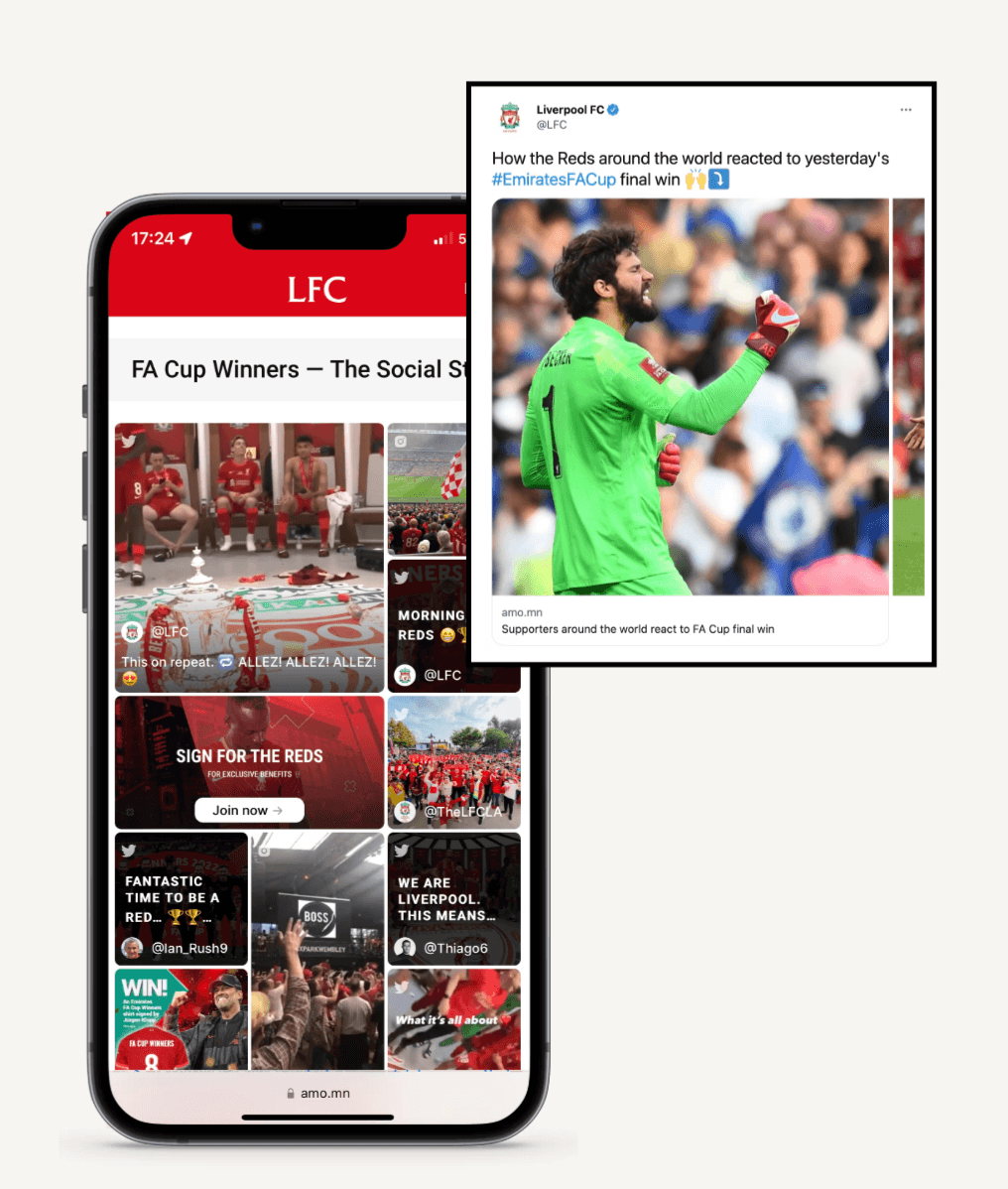
Click-Through Tiles connected fan engagement to retail, membership and competition entry, turning FA Cup interest into measurable conversion and first-party fan insight — all within an environment Liverpool could fully measure and optimise.
This behavioural insight provides clarity on which formats to prioritise, scale or stop – turning non-matchdays into learning moments that strengthen performance when matchday returns. This gives the team richer first-party fan data they can use to personalise ongoing experiences and re-engage audiences between fixtures, turning passive content consumption into measurable actions like ticket sales, merchandise purchases and deeper fan relationships.
More screens = more opportunity
Diego Pinzón, Director of Digital Media and Content at Atlanta United FC, predicts that second-screen content will increasingly compete with the live match itself – with fans taking the driving seat in creating and amplifying that experience.
This shift reflects the rise of the “third space”: shared digital environments where fans connect in real time, regardless of physical location.
It means a supporter in Australia can react, debate, and create alongside fans in Europe while the match unfolds.
The scale of these spaces is already notable. The NBA’s Discord server alone has more than 147,000 members, highlighting how matchday attention now lives far beyond the stadium and broadcast feed.
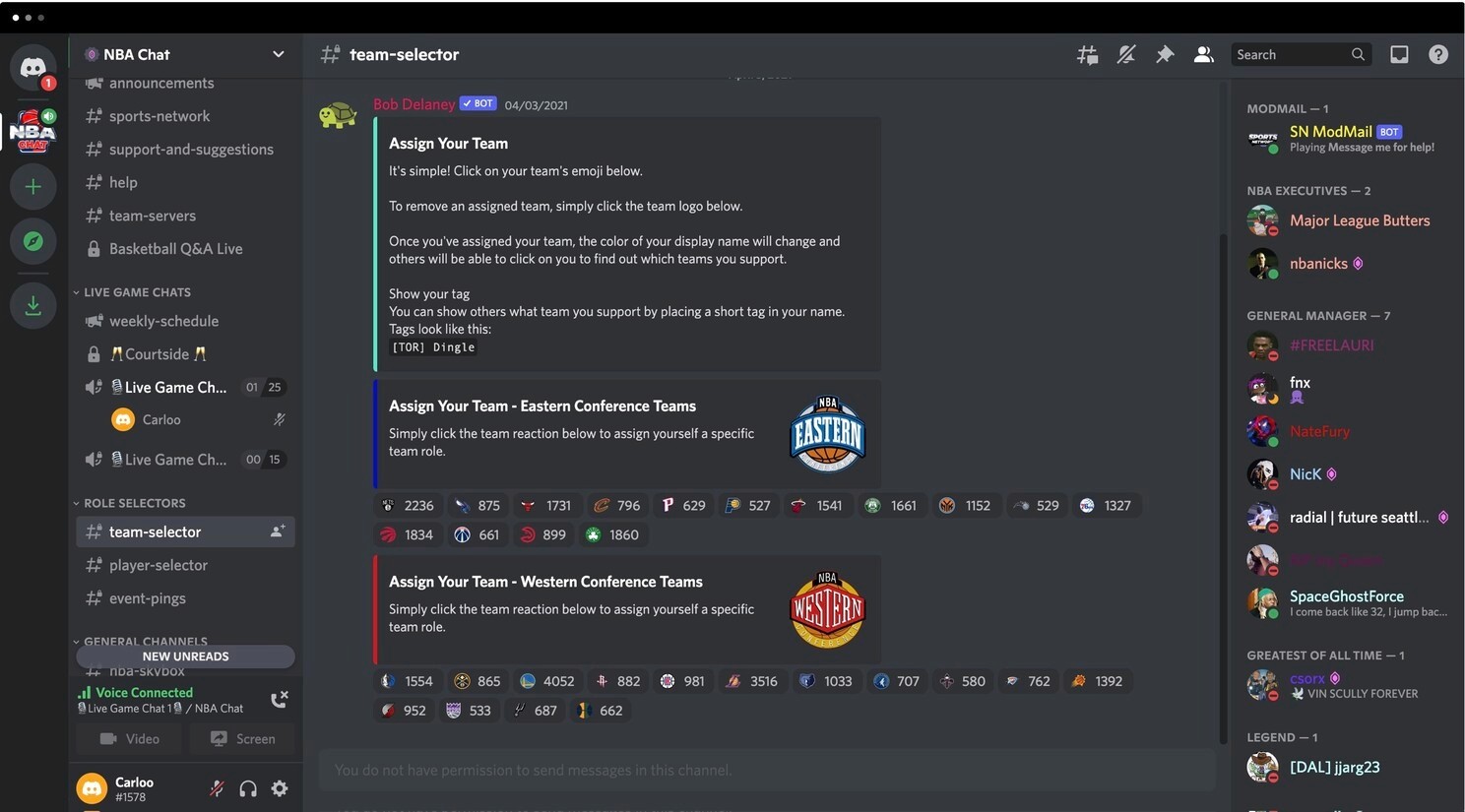
Live blogs and online chat functions have turned fandom into a deeply social experience, with instant reaction podcasts and live broadcasts becoming increasingly popular - and every interaction into a signal of intent, emotion and interest.
If clubs themselves can harness the power of “dual-screen” entertainment sooner rather than later, fans will become deeply grateful and more engaged than ever, but it also lends itself as an opportunity to gain visibility into real fan behaviour and understand what really resonates, creating a clearer line between content participation and outcomes.
The advantage belongs to the teams that know what fans do, not just where they watch.
No restricted areas
Amazon’s All or Nothing series has provided unprecedented access to elite sporting organisations, documenting full campaigns for clubs such as Arsenal, Manchester City, and Juventus, alongside the New Zealand All Blacks and NFL franchises, including the Arizona Cardinals and Los Angeles Rams.
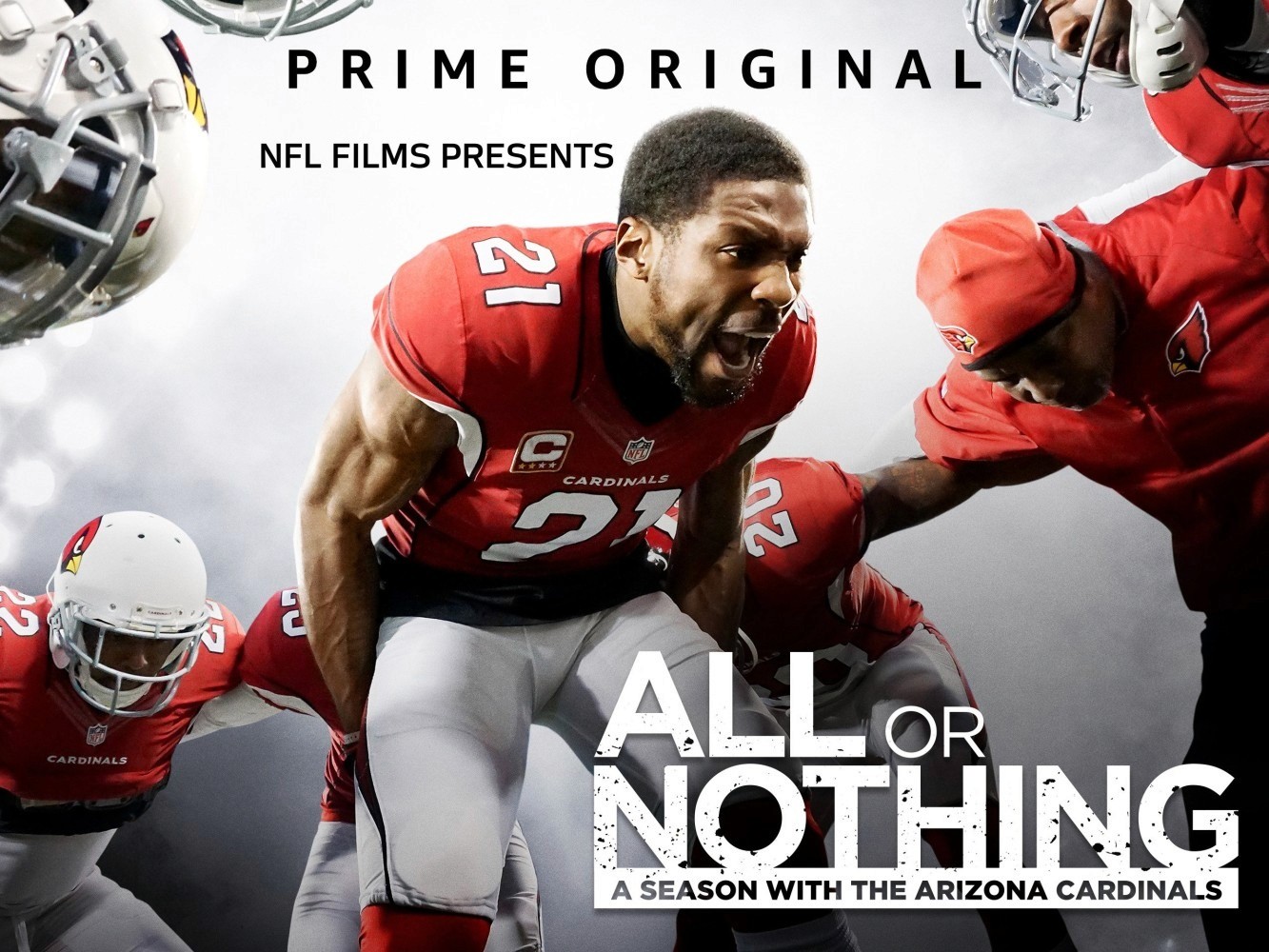
These documentaries were among the first modern sports media to open up the inner reality of elite sport, revealing everything from dressing room confrontations to boardroom decision-making. In doing so, they’ve fundamentally changed how fans perceive teams.
Netflix has set a precedent with productions like Formula 1: Drive to Survive and Sunderland ’Til I Die, proving the appetite for long-form, access-driven sports content at scale.
There are measurable benefits for the institutions involved: allowing teams to control how access is framed, extend their story far beyond matchday, and generate a deep library of high-impact content consisting of clips, moments and narratives that fuel ongoing engagement across digital channels.
But the real value goes beyond exposure.
This content creates sustained fan attention, repeat interaction and behavioural signals that traditional broadcast coverage never captures. It turns a season into a living content ecosystem rather than a fixed media product.
It’s no surprise that major sports organisations now see documentary access as a strategic asset, not a marketing gamble.
As competition for attention intensifies, expect more teams to invest in formats that don’t just tell their story, but keep fans actively engaged with it long after the final whistle.
Crypto, NFTs and The Metaverse
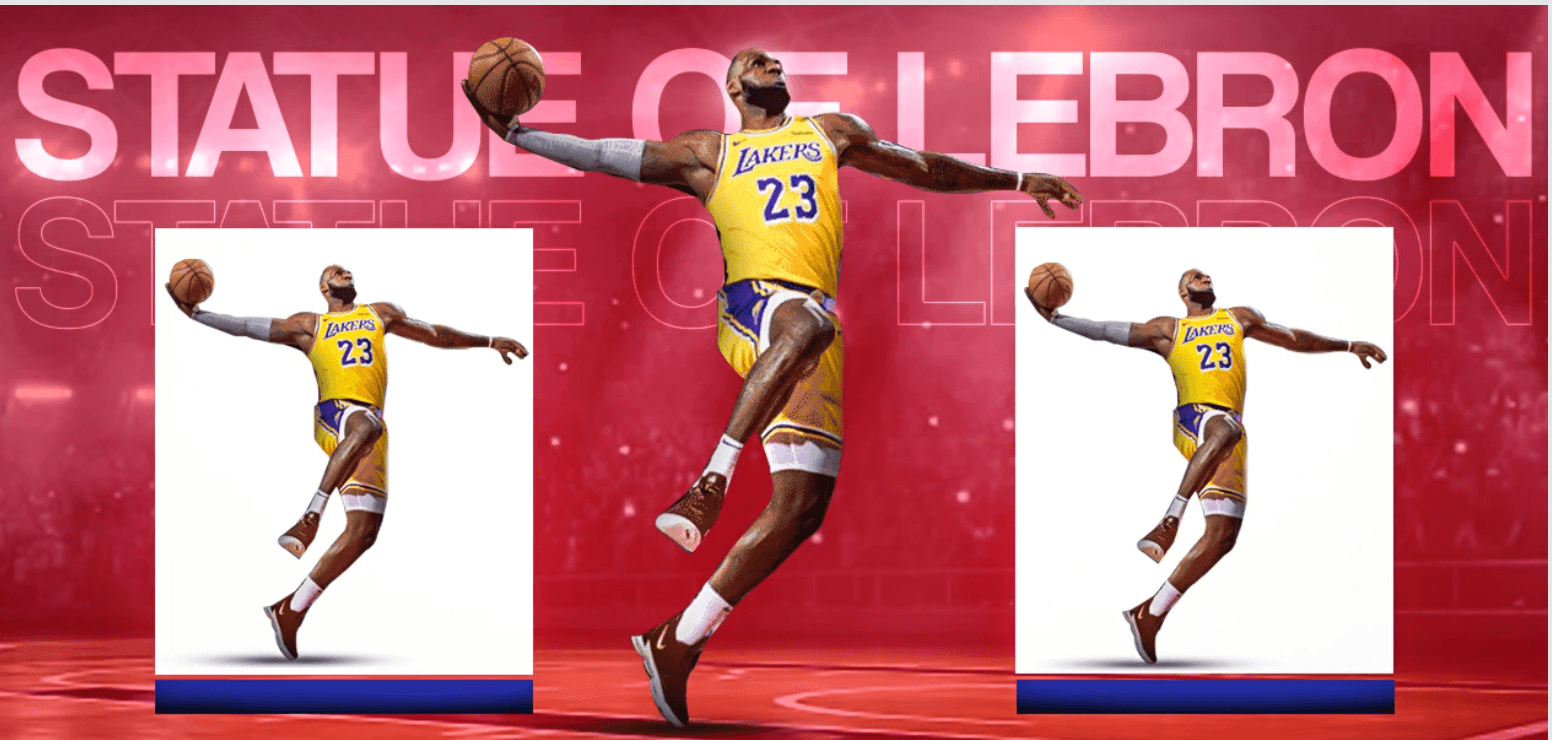
The most expensive NFT in the world is a digital statue of LeBron James, which sold for a whopping $21.6m, signalling early demand for digital sports assets.
Bitcoin.com reported that Real Madrid and Barcelona jointly filed a trademark application related to cryptocurrency wallet services.
This move highlights how fans are increasingly comfortable engaging with teams through owned, interactive web-based formats such as branded collectables to tokenised access, rather than just static merchandise.
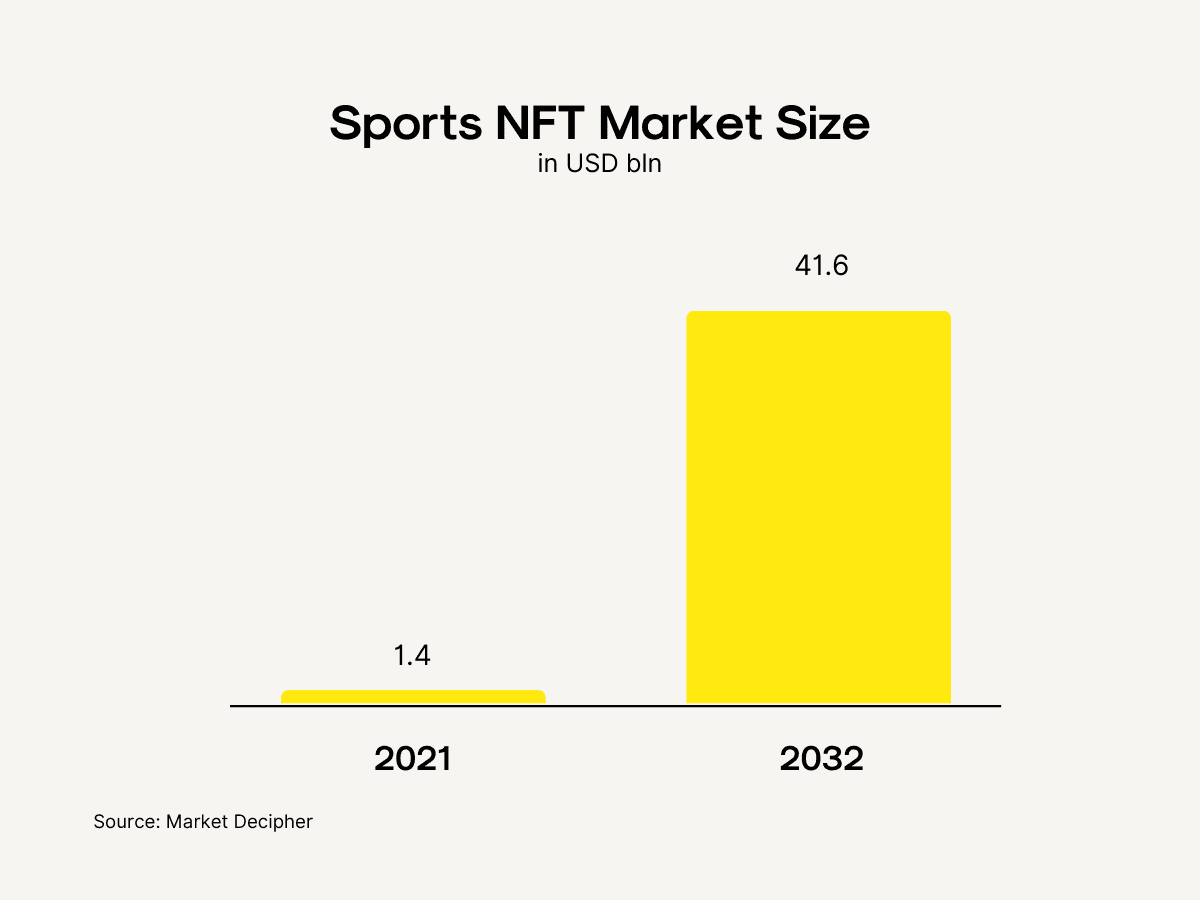
Market Decipher research points to sustained long-term growth in NFT-based sports collectables from 2022 to 2032, alongside a broader expansion of the sports trading cards market, which is forecast to grow from around $12.9bn in 2021 to over $49bn by 2032.
And the same evolution is already happening in ticketing.
Deloitte’s 2022 sports industry outlook highlighted how individual and season tickets are transforming from simple access passes into dynamic digital products capable of unlocking content, experiences and ongoing engagement across a season.
For sports organisations, the opportunity isn’t just to launch new digital formats, but to understand what those formats actually do.
When digital products are treated as intelligence layers rather than one-off experiments, teams gain clarity on what resonates, what converts and what’s worth prioritising next.
The rise of ethical sponsorships?
Sponsorships are essential revenue streams and marketing strategies for sports clubs. The Premier League’s “big six” alone generated $1.2bn in sponsorship deals in the 2021/22 season (the other fourteen teams’ sponsorships were worth a combined $300m), for a total sponsorship revenue of over $1.5bn.
All good? Not quite.
Betting remains a controversial industry for sports institutions, with ongoing questions around ethics and gambling addiction.
In 2021/22, nine of the 20 Premier League teams’ main shirt sponsors were in the gambling industry.
According to The Times newspaper, Premier League clubs are set to agree to a voluntary ban on “front-of-shirt” betting sponsorships in the future; in 2021/22, nine of the 20 Premier League teams’ main shirt sponsors were in the gambling industry.
A further nine Premier League clubs had sleeve sponsors from the betting or gambling industry in 2021.

This is a trend that the sporting world is already trying to set straight. In the US, the NFL has limits on the number of TV spots it will sell to sports betting companies, and the NBA isn’t allowing sportsbooks to advertise on its teams’ jerseys.
If sports institutions are beginning to take stronger stances on who and what they are willing to be sponsored by, it will be interesting to watch the rise of “ethical” sponsorships in the coming years.
Branching out: Esports and women’s sport
The Nielsen Group found that more than 2,250 esports sponsorship deals were announced globally in 2021, up from 1,785 in 2020.
During the same timeframe, the female esports fan base grew by 19%, highlighting how audience growth and commercial interest are accelerating in parallel.
Meanwhile, women’s sport more broadly is gaining significant traction. The Drum reported that in 2022, more than 15 million viewers watched women’s sport in the UK between January and March — nearly three times the audience recorded in 2021.
At the same time, EA Sports’ FIFA 23 introduced women’s club teams, signalling a shift in how women’s sport is represented and monetised.

TJ Adeshola, Head of U.S. Sports at Twitter, noted that the growth of women’s sports communities is already driving disproportionate impact across the industry, prompting organisations such as the NCAA to launch gender-specific social channels and rethink how they engage audiences.
The takeaway for brands and rights holders is clear: engagement patterns are evolving, and sponsorship value is being created outside traditional benchmarks.
To capitalise on this shift, organisations need visibility into real fan behaviour, understanding which content drives interaction, what influences outcomes, and where investment should be amplified based on evidence, not assumption.
Conclusion
These trends underscore a fundamental change in how sport connects with its audiences.
As fan engagement stretches beyond game day and across platforms, from blockbuster television to sophisticated financial products, success can no longer be measured by volume or reach alone.
Whilst fans rely on their favourite sporting institutions to deliver a consistent yet varied flow of engaging online and offline content, to be enjoyed on any device, at any time, and any place they choose, it depends on understanding real behaviour, knowing what resonates, and using that intelligence to make smarter decisions about what to amplify and where to invest.
See how other brands are bringing this to life with Amondo.
More from the blog

Ready to build something your audience will remember?
Bring your world of content into one connected content system - and make every piece work harder.
Trusted by brands that take content seriously